

Working With Your Healthcare Team

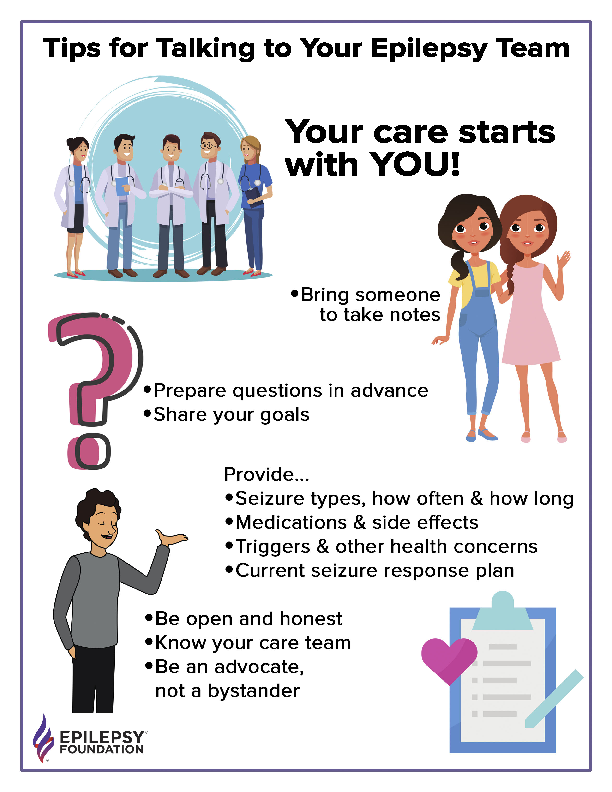
Talking with your doctor goes both ways. You want answers, but the doctor and other members of the healthcare team need information from you too! What you tell your doctor and team is important to getting the right diagnosis and care. There are a few things to consider when talking to and sharing information with your healthcare team.
Working with Your Healthcare Team
Dr. Wendy Trueblood Miller shares when to advocate for yourself in healthcare. You deserve the best care. This video clip is from the webinar Back to School Success: Ensuring Safety for Students with Epilepsy.
Your Role in Healthcare
The traditional approach to medical care is that the patient answers questions and the doctor recommends the treatment. However, patient-centered and self-management approaches stress the central role of the patient and family on the healthcare team. These approaches are very important when people are coping with a health problem over time.
Keep in mind that epilepsy is often ‘invisible’ to the healthcare providers. Seizures and other problems can’t be easily seen or diagnosed during an office visit.
You, the person with epilepsy and your family members, are central to what is going on.
Help Your Care Team
Tracking SeizuresHow You Can Help Your Healthcare Team
You and your family can help your healthcare team by:
- Sharing details about your seizures- what they are like, what is seen, how often they occur, and how they affect your life.
- Follow your doctor's advice- take medication as instructed, make any diet or lifestyle changes, and consider other treatments.
- Ask questions- when you are at an appointment or at home, ask your healthcare team any questions.
Learn More:
Medication ResourcesAsk Questions
The people on your health care team should have latest information about epilepsy to help you. They should look at your individual situation and be able to recommend what they think is best. Together, you work towards your goals. Does your healthcare team work like this?
- People work together best when they know what to expect from each other. Learn to ask questions about your role, your doctor’s role, and what to expect from each other.
- Learn how to talk about new ideas or treatments, other people who should be part of your team, and other concerns you may have.
- Many discussions take time and you may need to set up special appointments to talk about your questions, new concerns, or next steps in your care.
Some questions should be discussed early on in your treatment. However, your doctor may not be able to answer whether new treatments are appropriate for you until they get to know you and finds out more about your seizures.
Resources
Epilepsy Centers
Epilepsy centers provide you with a team of specialists to help you diagnose your epilepsy and explore treatment options.
Epilepsy Medication
Find in-depth information on anti-seizure medications so you know what to ask your doctor.
Epilepsy and Seizures Helpline
Call our Epilepsy and Seizures Helpline and talk with an epilepsy information specialist or submit a question online.
Tools & Resources
Get information, tips, and more to help you manage your epilepsy.
Related Stories


Press Releases
New Podcast Series Highlights Innovation, Advocacy, and Community Impact at the Epilepsy Foundation of America
Read Story Press Releases
113 Epilepsy Organizations Unite to Express Concerns about Leadership Change at the National Institute of Neurological Disorders and Stroke
Read Story